
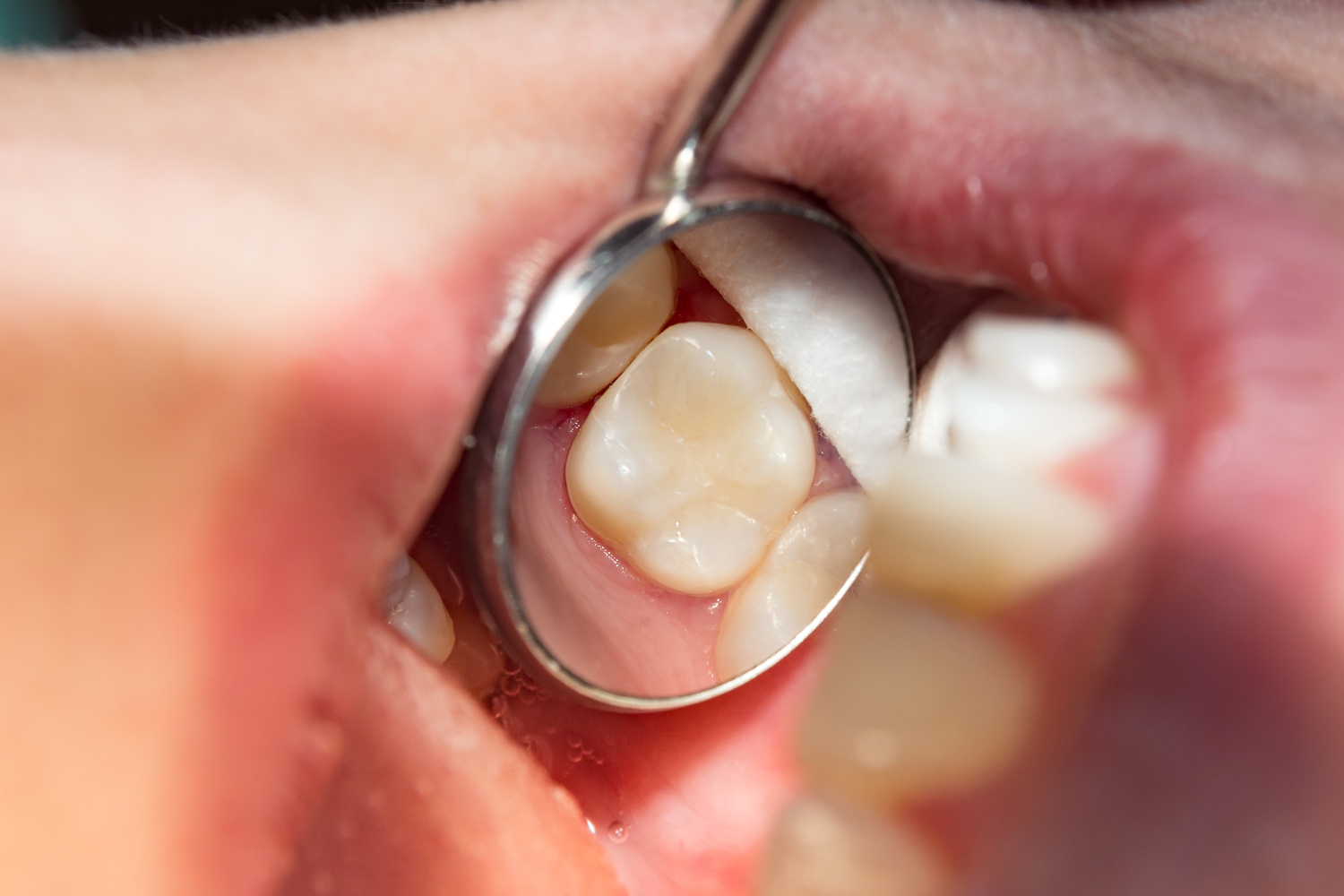
Tooth-Colored Fillings vs. Silver Fillings: What’s the Difference?
If you have a cavity, you may be given a choice between a tooth-colored filling and a silver filling, and that choice can feel bigger than it should. The short answer is that tooth-colored fillings are made from a composite resin that bonds directly to your tooth and blends with your natural smile, while silver fillings are made from a metal blend that has been used in dentistry for well over a century because of its strength. Neither option is universally “better.” The right filling depends on where the cavity is, how large it is, and what matters most to you, whether that’s appearance, cost, or long-term durability.
At Sheyenne Dental in Fargo, ND, Dr. Medora West-Roehl and our team believe in giving patients a full, honest picture of both materials, even though we take a holistic approach and place composite fillings exclusively. Below, we’ll break down what each filling is made of, how they compare, and answer the questions patients ask us most often.
This article will address:
- What composite (tooth-colored) fillings are made of
- What silver (amalgam) fillings are made of
- How the two options compare on appearance, tooth preparation, durability, and cost
- Why Sheyenne Dental places composite exclusively, and the benefits that come with it
- Whether tooth-colored fillings are durable enough for everyday use
- How long dental fillings typically last
- Whether tooth-colored fillings are safe
- Common follow-up questions, including replacing old fillings and caring for new ones
What Are Silver (Amalgam) Fillings Made Of?
Silver fillings, also called dental amalgam, are made from a mix of metals: mercury, silver, tin, and copper. Mercury binds the other metals together into a stable, hardened filling once it’s placed. Amalgam has been used in dentistry since the 1800s, and it has a long track record for strength, which is why you’ll often see it in molars that take on heavy chewing pressure.
The tradeoff is appearance. Amalgam is a dark, metallic gray, so it stands out against natural tooth enamel. Over time, it can also cause the surrounding tooth to develop a grayish tint.
What Are Composite Fillings Made Of?
Tooth-colored fillings, often called composite fillings, are made from a blend of plastic resin and fine glass or silica particles. Unlike amalgam, composite resin bonds directly to the tooth with an adhesive, which means your dentist typically removes less of your natural tooth structure to place it. The material is also shade-matched to your existing teeth, so it’s far less noticeable when you talk, laugh, or smile.
Composite is a popular choice for front teeth and any other visible area, though it’s also used successfully in back teeth for small to moderate cavities.
Tooth-Colored Fillings vs. Silver Fillings: A Side-by-Side Look
|
Factor |
Composite (Tooth-Colored) |
Amalgam (Silver) |
|
Appearance |
Blends with natural tooth color |
Visibly metallic, gray |
|
Tooth preparation |
Bonds to tooth, less removal needed |
Requires more removal to hold filling in place |
|
Durability |
Strong for small to moderate restorations |
Very strong, often preferred for large molar fillings |
|
Cost |
Typically costs more upfront |
Typically more budget-friendly |
|
Best suited for |
Front teeth, visible areas, smaller cavities |
Back teeth, larger restorations, high-pressure chewing surfaces |
A quick note before we go further: at Sheyenne Dental, we place composite fillings exclusively. We do not use amalgam. We’re covering amalgam here so you have a complete, honest picture of both materials, and because many of our patients come to us with amalgam fillings from a previous dentist and want to understand their options.
Appearance
Composite fillings are designed to disappear into your smile. Amalgam fillings do their job well, but they will always be visible as a gray or silver spot on the tooth.
Tooth Preparation
Because composite bonds chemically to the tooth, your dentist can often preserve more of your healthy enamel and dentin. Amalgam relies on a mechanically retentive shape, meaning the cavity has to be prepared a certain way to physically hold the filling in place, which sometimes requires removing a bit more tooth structure.
Durability
Amalgam has a slight edge in raw strength, which is why it’s often recommended for large molar fillings that face constant chewing force. Composite has improved significantly over the last two decades and holds up well for most everyday situations, but very large restorations on back teeth may still call for amalgam or a crown.
Cost
Composite fillings generally cost more than amalgam, partly due to the material itself and partly due to the additional time it takes to place them in layers. Insurance coverage varies quite a bit from plan to plan, so our team at Sheyenne Dental is happy to go over your specific coverage before you commit to either option.
Best Use Cases
Composite tends to be the first choice for front teeth and any spot where appearance matters. Amalgam is still a reasonable option for large fillings on molars, particularly when a patient wants a cost-effective, long-lasting solution and isn’t concerned about how visible the filling is.
The Sheyenne Dental Advantage: Why Composite Here Beats Silver Elsewhere
Choosing where to get a filling matters just as much as choosing the material. Here’s what sets treatment at Sheyenne Dental apart:
- No mercury, ever. Since we place composite exclusively, you never have to weigh the pros and cons of a mercury-containing material or wonder whether it’s the right choice for your family. That decision has already been made with your long-term wellness in mind.
- A natural-looking result every time. Composite is shade-matched to your existing teeth, so a filling from Sheyenne Dental blends in rather than standing out, whether it’s on a front tooth or a molar.
- Less removal of your healthy tooth. Because composite bonds directly to the tooth, Dr. West-Roehl can often preserve more of your natural enamel and dentin than a mechanically retained silver filling would allow.
- Modern technology built around composite. Tools like our Cerec same-day crown system and digital X-rays let us diagnose accurately and, when a filling isn’t enough on its own, move straight to a same-day, metal-free restoration instead of sending you elsewhere.
- A team that explains the why, not just the what. Dr. West-Roehl and our staff walk you through why composite is right for your specific tooth, so you leave understanding your treatment instead of just receiving it.
- One consistent standard of care. Every patient at Sheyenne Dental gets the same holistic, metal-free approach, so you’re not choosing between “the cheaper option” and “the better option.” You’re simply getting the option we believe is best.
If you’ve had silver fillings placed elsewhere in the past, this is also a good time to ask us about switching to composite. It’s one of the most common reasons patients choose to become part of the Sheyenne Dental family.
Are Tooth-Colored Fillings Durable?
Yes, modern composite fillings are built to handle everyday biting and chewing. The materials used today are far more advanced than the composites available even ten years ago, and with good oral hygiene and regular checkups, they hold up well for years of normal use. Historically, amalgam had a slight edge in raw strength for very large restorations on molars facing constant, heavy force. At Sheyenne Dental, we’ve found that today’s composite materials, combined with careful placement technique, handle these situations well too. In cases where a filling alone isn’t enough to restore a heavily damaged tooth, Dr. West-Roehl might recommend a different restoration altogether, such as a Cerec same-day crown, which we’re able to design and place in a single visit using in-house technology.
How Long Do Dental Fillings Last?
Most composite fillings last somewhere between 7 and 10 years, while amalgam fillings often last 10 to 15 years or more. Those numbers are general ranges, not guarantees, since the actual lifespan of any filling depends on a few factors:
- How well you brush and floss around it
- Whether you grind or clench your teeth
- The size and location of the filling
- Your diet, especially sugar and acid exposure
Routine exams give us a chance to catch small issues, like a hairline crack or early wear, before they turn into bigger problems. That’s one of the simplest ways to get the most life out of any filling, regardless of which material you choose.
Are Tooth-Colored Fillings Safe?
Composite resin is a well-established, metal-free material that’s been used safely in dentistry for decades. It contains no mercury, which is one of the main reasons we’ve chosen it as the only filling material we place at Sheyenne Dental.
Patients sometimes ask about the safety of amalgam fillings too, since they contain mercury. According to the American Dental Association, dental amalgam is considered a safe and effective restorative material for both adults and children over the age of six. We take a holistic approach to care at Sheyenne Dental, so we’ve made the decision to keep mercury out of our treatment altogether and offer composite as our only filling option. If you have questions about either material or about switching an existing amalgam filling, Dr. West-Roehl and our team are glad to talk through what makes sense for your specific situation.
Can Silver Fillings Be Replaced With Tooth-Colored Fillings?
In many cases, yes, and this is one of the most common reasons patients switch to Sheyenne Dental. Since we place composite exclusively, we regularly help patients transition away from older amalgam fillings, whether they’re looking for a more natural look, want to move away from a metal-containing material for personal or holistic reasons, or have a filling that’s cracked, worn down, or showing new decay at the edges. If your amalgam filling is still in good shape, we’ll talk through the options with you rather than push for immediate replacement, but if you’d like it swapped for composite, that’s a straightforward procedure we’re happy to walk you through.
What Does the Filling Procedure Involve?
The process is similar for both materials, with a few differences in the final steps.
- The tooth is numbed with a local anesthetic so you’re comfortable throughout the visit.
- Decay is removed, and the tooth is cleaned and prepared.
- For composite fillings, a bonding agent is applied to help the resin adhere to the tooth.
- The filling material is placed and shaped to restore the natural form of the tooth. Composite is placed in layers and hardened with a curing light; amalgam is placed and allowed to set.
- Your bite is checked and adjusted, and the filling is polished smooth.
Most patients are back to normal eating and talking within a few hours, once the numbness wears off.
Will I Experience Tooth Sensitivity After a Filling?
Some mild sensitivity to hot, cold, or pressure is common for a few days after a filling, especially if the cavity was deep. This typically fades on its own within a week or two. If sensitivity lingers longer than that or feels sharp rather than mild, give our office a call so we can take a look.
How Do I Care for My Fillings So They Last?
A few simple habits go a long way toward protecting any filling:
- Brush twice a day and floss daily to keep decay from forming around the edges of the filling
- Avoid chewing on ice, pens, or other hard objects that can crack a filling
- Ask about a night guard if you grind your teeth in your sleep, since that puts extra pressure on fillings over time
- Keep up with regular cleanings and exams so small issues get caught early
Why Choose Sheyenne Dental for Your Filling in Fargo, ND?
Dr. Medora West-Roehl and the team at Sheyenne Dental have spent nearly a decade building relationships with families across Fargo, and that experience shapes how we approach something as common as a filling. We take a holistic approach to care, which is why composite is the only filling material we place. We believe in keeping mercury out of our treatment entirely, and we’re upfront about that from the start so you know exactly what to expect before you ever sit in the chair.
We also invest in technology that makes treatment more convenient, including Cerec same-day crowns, digital X-rays, and 3D CBCT imaging, so we can diagnose accurately and treat efficiently. Whether you need a simple filling or want to replace an older amalgam filling with a metal-free option, our goal is the same: comfortable, honest care that treats you like part of the family.
Schedule Your Consultation Today
You don’t have to weigh the tradeoffs of silver fillings on your own. At Sheyenne Dental, we’ve already done that work for you by choosing to place composite exclusively, so every patient gets a natural-looking, mercury-free restoration backed by modern technology and a team that takes the time to explain your care. Whether you need a new filling or want to replace an older amalgam filling with something that better fits your family’s values, we’re here to help. Call our office or request an appointment online to get started. Be confident in your smile.
Sources
- American Dental Association, MouthHealthy, “Dental Filling Options”:
- American Dental Association, MouthHealthy, “Fillings (Silver Colored)”:
- American Dental Association, MouthHealthy, “Dental Amalgam”:
- National Institute of Dental and Craniofacial Research, “Dental Fillings”:
- U.S. Food and Drug Administration, “Treatment Options for Dental Caries”: